
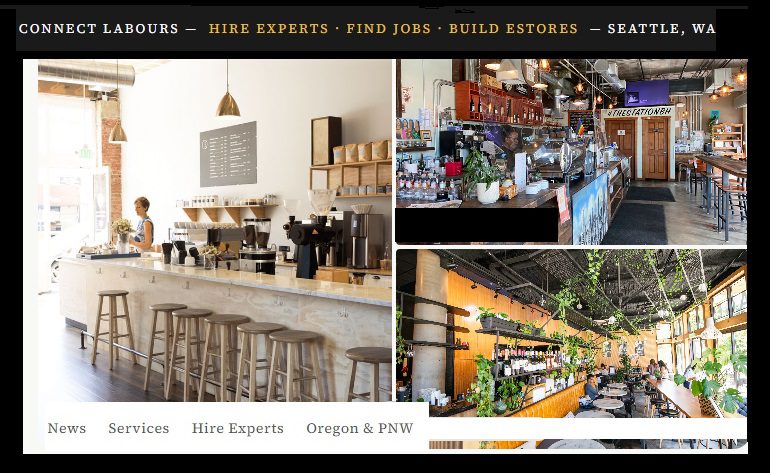
The Seattle Coffee Shop That Cut Its Ad Spend by 30% — and Tripled Its Customers — Using AI
How small Pacific Northwest businesses are leveling the playing field against corporate giants through AI-powered advertising — and what every local owner in Seattle and Astoria needs to know right now.
I stopped trying to out-think the algorithm,she said.
I just told it what I needed and got out of the way.Her story is not unique. Across Seattle, Astoria, and the broader Pacific Northwest, small and independent businesses are discovering what corporate marketing departments have quietly known for two years: AI-powered advertising has permanently changed who can compete — and who gets left behind.
The Old Problem: Advertising Built for Giants
For most of the past decade, digital advertising rewarded scale. The businesses that won weren’t always the ones with the best product or the most loyal local following — they were the ones with the biggest budgets, the dedicated ad operations teams, and the data analysts who could decode platform dashboards that changed every six months. A national coffee chain could afford a team of five people to run split tests, manage keyword bids, and optimize Instagram creatives. An independent café in Fremont could not. The result was predictable: the big got bigger, and the local got louder without being heard. According to industry consulting firm Madison and Wall, AI-related advertising sales totaled just $1 billion in 2022. By 2025 that had jumped to $35 billion. In 2026, it’s forecast to hit $56 billion — a 60 percent surge in a single year. The question for Pacific Northwest small businesses is no longer whether AI is reshaping advertising. It’s whether they’re on the right side of that shift.“Google and Meta were already winning, and now, with these AI tools, they’re lapping the field. Being bigger isn’t just proportionally better — it’s exponentially better.” — Luke Stillman, Managing Director, Madison and WallThat exponential advantage, however, is no longer exclusive to the giants. For the first time, the same AI infrastructure that powers L’Oréal’s 800-campaign global operation is available to a Seattle florist with a $400 monthly marketing budget.
The New Reality: AI as the Great Equalizer
The shift began quietly. Google introduced Performance Max, an AI-powered campaign type that automatically distributes ads across Search, YouTube, Display, Gmail, and Maps — allocating budget in real time toward whichever placement is most likely to convert. Meta launched Advantage+, which uses machine learning to find audiences and test creative variations without requiring a human to manually define either. Suddenly, the expertise that once required an agency retainer was baked directly into the platform. Here is what that looks like in practice for a small Pacific Northwest business:- A Seattle bakery sets a daily budget of $15 on Google Local Services Ads. The AI handles keyword matching, bid adjustments by time of day, and lead verification. No agency needed.
- An Astoria kayak rental company uploads three photos and a headline to Meta Ads Manager. Advantage+ generates a dozen creative variations, tests them against real audiences, and shifts budget toward the version that’s driving bookings — automatically.
- A Tacoma yoga studio uses Pinterest Performance+ to reach women actively researching wellness activities in their area. The platform’s AI targets based on intent signals, not just demographics.
- A Bellingham food truck runs YouTube pre-roll ads through Google’s AI targeting stack, reaching locals who’ve been searching for nearby lunch spots — without knowing anything about programmatic bidding.
AI Advertising: What the Numbers Say in 2026
| Metric | Figure | Source |
|---|---|---|
| Global AI-driven ad revenue forecast (2026) | $56 billion | Madison and Wall |
| Year-on-year AI ad growth rate | +60% | Madison and Wall |
| Google Q1 2026 advertising revenue | $77 billion | Google Q1 2026 Earnings |
| Meta Q1 2026 revenue growth | +33% | Meta Q1 2026 Earnings |
| Average campaign cost saving with AI tools | 30% | Monks Marketing |
| Average content production saving with AI | up to 65% | Monks Marketing |
| Reduction in irrelevant Google ads since AI | 40% | Google VP Global Ads |
| Sources: Madison & Wall, Google Q1 2026 Earnings, Meta Q1 2026 Earnings, Monks marketing firm. | ||
How the Tools Actually Work: A Plain-Language Breakdown
For business owners in Seattle and Astoria who haven’t yet explored these platforms — or who tried years ago and found them overwhelming — here is what has fundamentally changed.Targeting: The Algorithm Now Does the Research
Traditional ad targeting required you to know your audience before you spent a dollar. You would define: women, 25–40, Seattle, interested in specialty coffee. You were essentially guessing based on intuition and past experience. AI targeting works in reverse. You tell the platform what a conversion looks like — a website purchase, a phone call, a form submission — and it finds the people most likely to take that action. It analyses billions of real-time signals: what people searched this morning, which videos they watched, what they’ve recently bought, where they’ve been. It finds your customer before your customer knows they’re looking. Meta’s VP of Product, Krassimir Karamfilov, has described this shift directly: rather than an advertiser sayingtarget women in Seattle aged 24–35,Meta’s AI is now recommending which customers a brand should go after. The advertiser’s job is no longer to define the audience — it’s to give the AI enough signal to find the right one.
Creative: AI as Your Part-Time Copywriter
Google’s Responsive Search system allows you to write up to 15 headlines and 4 descriptions for a single ad. The AI then tests every possible combination against real search traffic, identifies which pairings perform best for which search queries, and automatically serves the highest-converting version. For a small Seattle business that can’t afford a copywriter or a month-long A/B test, this is significant. You write once. The algorithm refines continuously. Loop, a concert earplug brand, used this system to expand internationally — automatically translating ad copy and placing country-specific keyword campaigns without a dedicated global marketing team. The same principle applies to a Capitol Hill restaurant launching delivery, or an Astoria bed and breakfast targeting Pacific Northwest road-trippers.Bidding: Letting the Machine Find the Price
Manual bidding — deciding how much to pay per click, per impression, per conversion — was once an art form that agencies charged thousands of dollars a month to perform. Smart Bidding on Google and equivalent systems on Meta and Pinterest now handle this automatically, adjusting bids in real time based on conversion probability, competitor activity, and user intent signals simultaneously. The result: your budget works harder without you having to watch it every hour.Which AI Ad Platform Is Right for Your Pacific Northwest Business?
Not every platform is equally suited to every type of business. Here is a practical breakdown for Seattle and Astoria-area owners:1. Google Ads & Google AdSense
Best for: Service businesses, restaurants, trades, healthcare, anyone whose customers search before they buy. Key AI feature: Performance Max campaigns distribute budget across all Google surfaces automatically. Start here: Google Performance Max2. Meta Ads (Facebook & Instagram)
Best for: Retail, food and beverage, events, fitness, lifestyle brands with visual products. Key AI feature: Advantage+ Shopping automates audience discovery, creative testing, and budget allocation. Start here: Meta Ads Manager3. YouTube Ads
Best for: Businesses that can produce short video content — even with a smartphone. Key AI feature: Google’s Gemini-powered targeting matches video ads to intent signals from Search, Maps, and Gmail. Start here: Google Video Campaigns4. Pinterest Ads
Best for: Outdoor, wellness, home, food, lifestyle — particularly strong fit for Pacific Northwest brands. Key AI feature: Performance+ automates creative optimisation and targets users in active planning mindsets. Start here: Pinterest Business Ads5. X (Twitter) Ads
Best for: News-adjacent brands, events, public commentary, thought leadership. Key AI feature: Programmatic audience segmentation and real-time keyword targeting. Start here: X Ads PlatformA 5-Step AI Advertising Starter Guide for Seattle & Astoria Small Businesses
You don’t need an agency, a marketing degree, or a large budget to start. Here is a straightforward framework:-
- Define one clear conversion goal before you spend anything. AI ad tools perform best when optimising toward a specific outcome — a phone call, a website purchase, a booking, a form fill. Before you open any ad platform, decide: what does success look like in a single action?
-
- Install conversion tracking on your website. Without this, AI bidding systems are flying blind. Install Google Ads conversion tracking and the Meta Pixel on your site before running a single ad. This is non-negotiable — it is the data the AI needs to improve.
-
- Start with Google Performance Max or Meta Advantage+. Both are designed specifically to remove the complexity barrier for small businesses. Set a modest daily budget ($10–$20 to start), upload your best photos and a clear headline, and let the system run for at least two full weeks before evaluating results. AI needs time to learn.
-
- Give the AI your best creative inputs — then step back. The AI optimises what you give it. Upload multiple photo variations, write several headline options, and be specific about your offer. Then resist the urge to change everything after three days. Frequent manual changes reset the machine learning cycle and slow performance.
- Reinvest your savings into testing, not just more of the same. Businesses using AI tools are saving 30–65% on campaign production costs. The smartest move is to reinvest those savings into testing new platforms, new creative formats, or new seasonal offers — not simply running the same campaign at higher volume.
“By generating savings, you can fund new kinds of testing.” — Chris Wilhelmi, Global Head of Data and Media, Monks
The Trade-Offs: What AI Advertising Cannot Do
It would be dishonest to write about AI advertising without acknowledging what it does not solve. Small business owners in Seattle and Astoria deserve a clear-eyed view of both sides. What AI advertising does well:- Finding audiences you didn’t know existed
- Eliminating wasted spend on irrelevant placements
- Scaling testing without scaling headcount
- Reducing the expertise barrier for getting started
- A genuinely compelling offer — AI can amplify a good product but cannot manufacture demand for a bad one
- Brand voice and visual identity — the most effective AI-powered campaigns still have distinct, human-crafted creative at their core
- Local knowledge and community trust — a neighbourhood coffee shop’s real competitive advantage is still the relationship with its regulars, not its click-through rate
- Strategic direction — AI optimises toward the goal you set; if you set the wrong goal, it will optimise toward the wrong outcome with great efficiency
The Bigger Picture: Why This Moment Matters for the Pacific Northwest
Seattle has always been a city where the gap between a local founder with a good idea and a tech giant with deep pockets felt narrower than almost anywhere else in America. That proximity to innovation — to Amazon, Microsoft, Google, and a dense ecosystem of startups and engineers — has historically meant Pacific Northwest businesses see new technology tools earlier, adopt them faster, and benefit more directly. AI advertising is no different. The tools that drove $77 billion in Google ad revenue and $56.3 billion in Meta revenue in the first quarter of 2026 alone are the same tools available to a Capitol Hill coffee shop, an Astoria fishing charter, and a Bellingham independent bookstore. The question is not whether to use them. The question is how quickly a local business owner is willing to learn, experiment, and adapt — before the competitor down the street does it first. For support finding digital marketing experts and AI advertising specialists across the Pacific Northwest, visit Connect Labours — Pacific Northwest Expert Hub.Article Summary
- AI advertising tools have eliminated the expertise and budget barriers that once kept small businesses from competing with national chains.
- Google Performance Max, Meta Advantage+, and Pinterest Performance+ are the most accessible entry points for Pacific Northwest small businesses in 2026.
- Businesses using AI ad tools are reporting campaign cost savings of 30–65%, which can be reinvested into testing and growth.
- AI handles targeting, bidding, and creative testing automatically — but human brand direction, local knowledge, and a compelling offer remain essential.
- Seattle and Astoria businesses that adopt early stand to gain a durable competitive advantage in their local markets.
Filed under: AI Advertising · Small Business Seattle · Astoria OR · Google Ads · Meta Ads · Pacific Northwest Marketing · Digital Advertising 2026 · Local Business Growth